• Student area
  • Alumni area
  • Company area
  • FREN
ECV
BrochureApply
  • ECV
    • News
    • Admission to ECV
    • Accreditations
    • Study Art and French Language
    • Exchange program
    • Fees
    • FAQ
    Campuses
    • Paris
    • Bordeaux
    • Nantes
    • Lille
    • Aix-en-Provence
    • Strasbourg
    Living in France
    • Living in Paris
    • Living in Aix-en-Provence
    • Living in Lille
    • Living in Nantes
    • Living in Bordeaux
    News
  • Design
    • Foundation Year in Art & Design
    • Bachelor’s in Design
    • Masters' degree in Design
    • Bachelor's degree in Interior Design
    • Masters' degree in Interior Design & Scenography
    • Bachelor Graphic Design
    • International Master: Graphic Design for Art Direction
    • Foundation Year in Design
    Animation
    • Foundation year in Animation & Game
    • Bachelor's degree in Animation 2D/3D
    • Masters' degree in 2D/3D Animation
    Game
    • Foundation year in Animation & Game
    • Bachelor's degree in Game
    • Master's degree in Game
    Digital
    • Masters' Degree in Digital
    • Bachelor’s degree – Digital project manager
    Design

    All programmes

    Foundation year, Bachelors and Masters in Design, Animation, Game and Digital.

  • After ECV
    • Jobs
    • Alumni
    • Portfolio
    Featured jobs
prepa-animtion-game-ecv

Foundation year in Animation & Game

The foundation year, first year training at ECV, prepares the students for the higher level of study at the school as well as to enter the “grandes écoles” of animation in France and abroad.

Download a brochure

Discover, experiment, conceive and explore

The animation & game foundation year course is a one-year introductory course where students learn the fundamentals of drawing and are introduced to the production techniques used in animated films and video games. This course also introduces students to the different areas of the digital sector (gaming, film, special effects, etc.), and develops their open-mindedness and fosters team work, which are two crucial skills for working in this industry.

I chose to take the Animation & Game foundation year out of passion for drawing. The animation sector is a way that I can bring my characters to life and tell stories.

Romain-lacau
Romain Lacau

ECV

ECV

The school
  • Our story
  • News
  • Contact us
Programs
  • All programs
  • International
Campuses
  • Paris
  • Bordeaux
  • Nantes
  • Lille
  • Aix-en-Provence
  • Strasbourg
Legal noticePrivacy policy

Tous droits réservés ECV 2026

univers-ecv-animation-prepa
moulage-ecv-animation
nature-morte-ecv-animation

Courses

Drawing

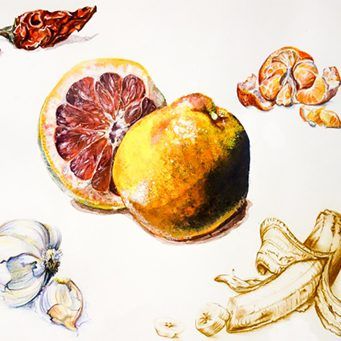
Learning how to draw helps to gain an understanding of how shapes are formed and the role of light and composition. Through a notebook and personal research, students nourish their visual culture on a daily basis and learn how to recognize, experiment and memorize. In such a way, they develop autonomy and a critical eye through careful practice.

Nude sketching

Students learn how to draw the proportions of the human body. Through methodical observation and live model sketching, they face the complexity of the human body and learn how to draw the model in various poses quickly and effectively. Drawing a body within a space also involves learning the different modes of expression and developing one’s own interpretation.

Outdoor sketching

Students practice sketching in an environment outside of the school such as museum exhibits, public gardens, train stations and streets. The drawing of architectural spaces and statuary develops respect for proportions, volume and perspective, in the foreground and background. Students learn how to make choices, capture the essence, and draw quickly.

Colour

The art of colours, their combinations and interactions is an essential component of learning to draw. Students study colour theory, the colour wheel, the relationships between colours, and put their knowledge into practice. They learn how to see colour, simplify it, and apply it in successive touches to build volume.

Perspective

Students need to restore the complexity of volume and space into two dimensions following the theory of perspective. Learning spatial geometry allows them to evaluate real depth effectively compared to pictorial depth. In a theoretical approach, perspective complements direct observation.

Illustration

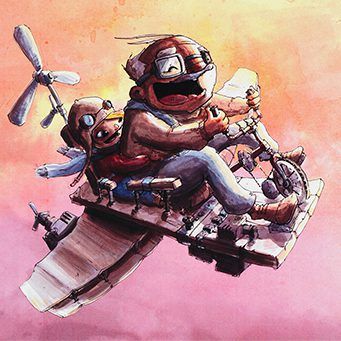
Illustration is a discipline in which students can fully express themselves. Unlike drawing classes, illustration is always based on an idea, narration or even music. It is one of the major forms of expression in graphic arts. A wide variety of techniques are used, enabling each student to develop his or her personal writing and style.

Volume

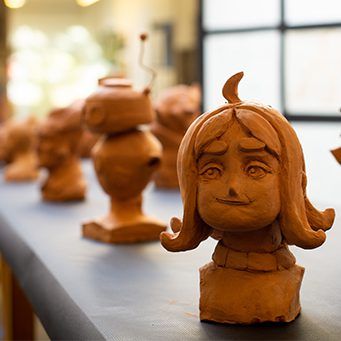
Controlling the rules of building shapes, students create threedimensional models to illustrate volume with paper, cardboard or any other available materials.

Animation 3D

Digital animation, by means of video games, has infiltrated the traditional animation sector, in addition to television and the Web. Creating backgrounds and characters, inventing worlds and bringing them to life, require an equal dose of imagination and software expertise. This introductory course will expose students to narration and storyboard editing techniques, as well as modeling and 3D animation software (After Effects, 3DS Max…).

Character design

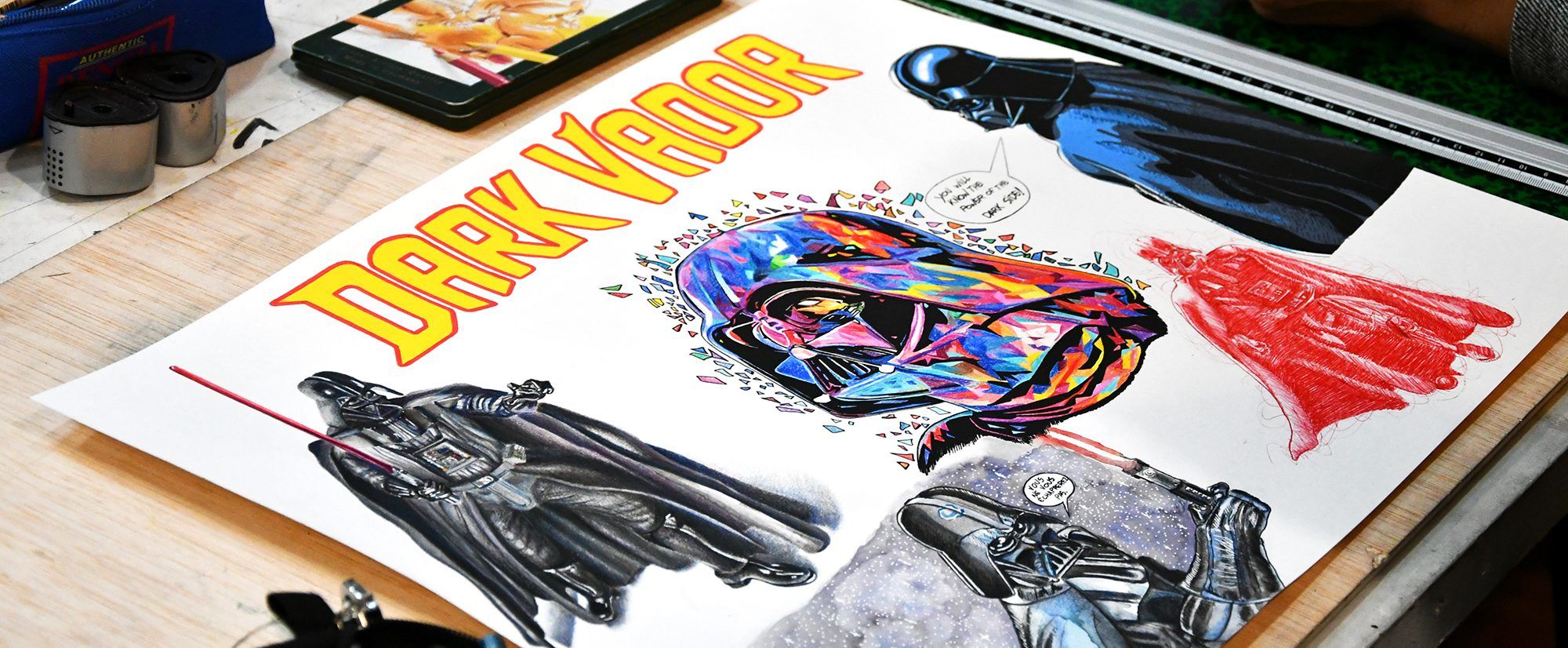
Character design is a highly valued position in video game and animation studios. Charisma, proportions and style are all key factors in the creation of a good character. Beyond the actual drawing, students need to capture the character’s typology by defining its psychological and sociological attributes to create a better design. These are also determining factors for the animation in production.

Film history

A broad knowledge of film is vital for a good introduction to all aspects of film production. Deciphering and analyzing the greatest movies promotes a better understanding of the language of film.

Storyboard

The main assistant to the director, the storyboarder divides a story into images and makes framing and editing decisions. After scripting their stories, students will learn how to illustrate short sequences in precise images, an essential step in film production.